A small bug with a big problem
The Spotted Lanternfly looks pretty, but its impact is anything but.
It started at soccer practice
Our teammate Reuben swatted a bug off his neck and noticed something strange: the insects were everywhere. On the grass, on the trees, even on his soccer bag. Our teammates had seen them in backyards and near the golf course too.
Meet the Spotted Lanternfly
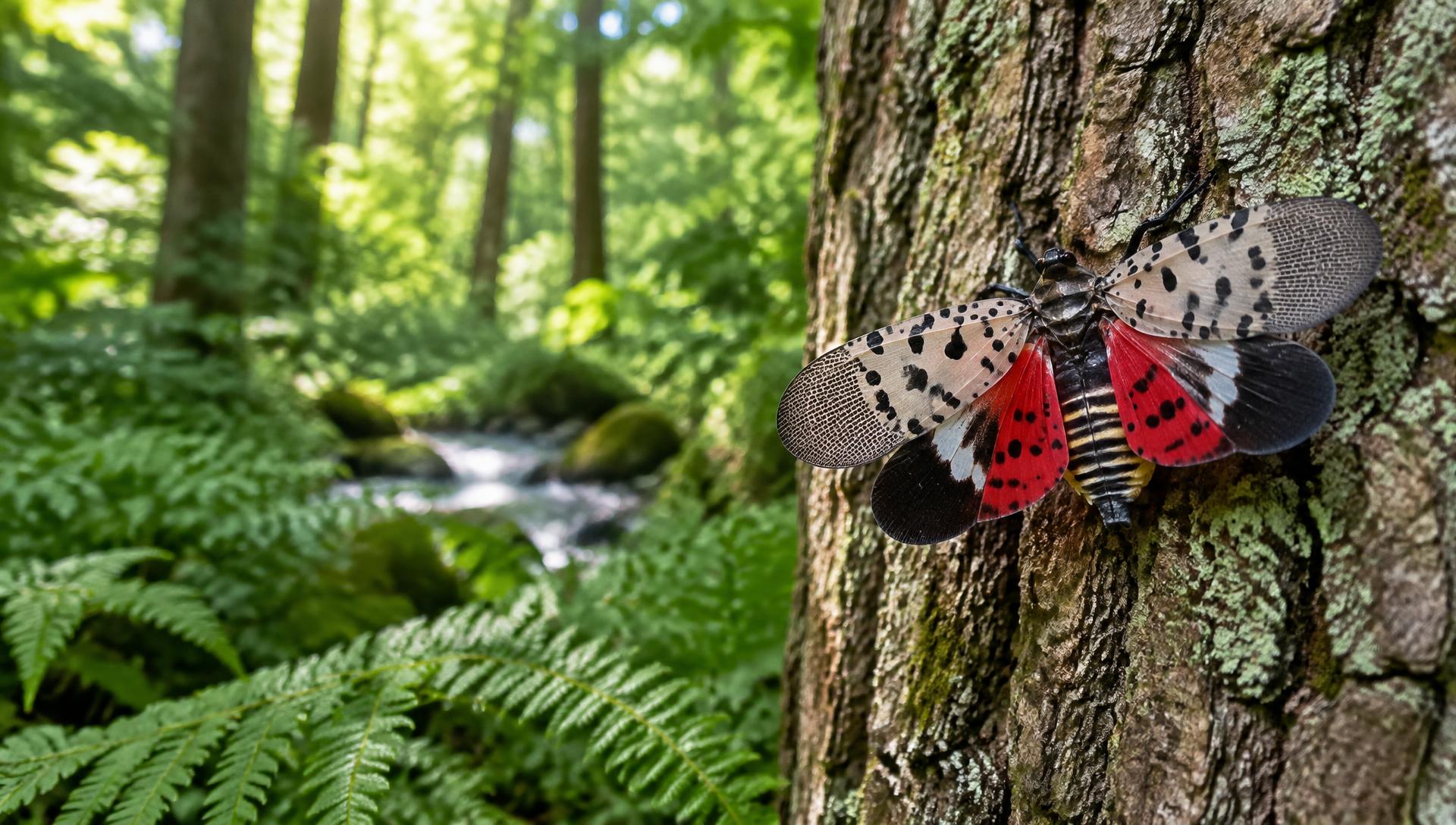
Spotted Lanternflies (Lycorma delicatula) are invasive planthoppers native to parts of Asia, including China. First found in Pennsylvania in 2014, they have since spread to other states, including Virginia. Adults have gray, black-spotted forewings and red-and-black hindwings.
Why it matters
Farmers, vineyards, parks and backyards all feel the impact. Protecting our local environment starts with understanding the insect.
- They weaken plants. Lanternflies feed on plant sap and can stress grapevines, fruit trees, hardwoods and other plants. Grapevines are especially vulnerable; not every infested tree dies.
- They make a mess. Their sticky waste, called honeydew, attracts other insects and supports black sooty mold on plants and outdoor surfaces.
- Their eggs can survive winter. Cold weather does not reliably eliminate egg masses, allowing new nymphs to hatch in spring. Survival varies with conditions.
- They don’t belong here. An invasive species spreads into an area where it does not naturally live and causes harm to the local environment.
You can only squash what you can find
People are asked to “See it and Squash it” to slow the spread, following local guidance. But you can only squash what you can find. That is the problem we set out to solve: how can we detect Spotted Lanternflies earlier, so people can respond faster?